
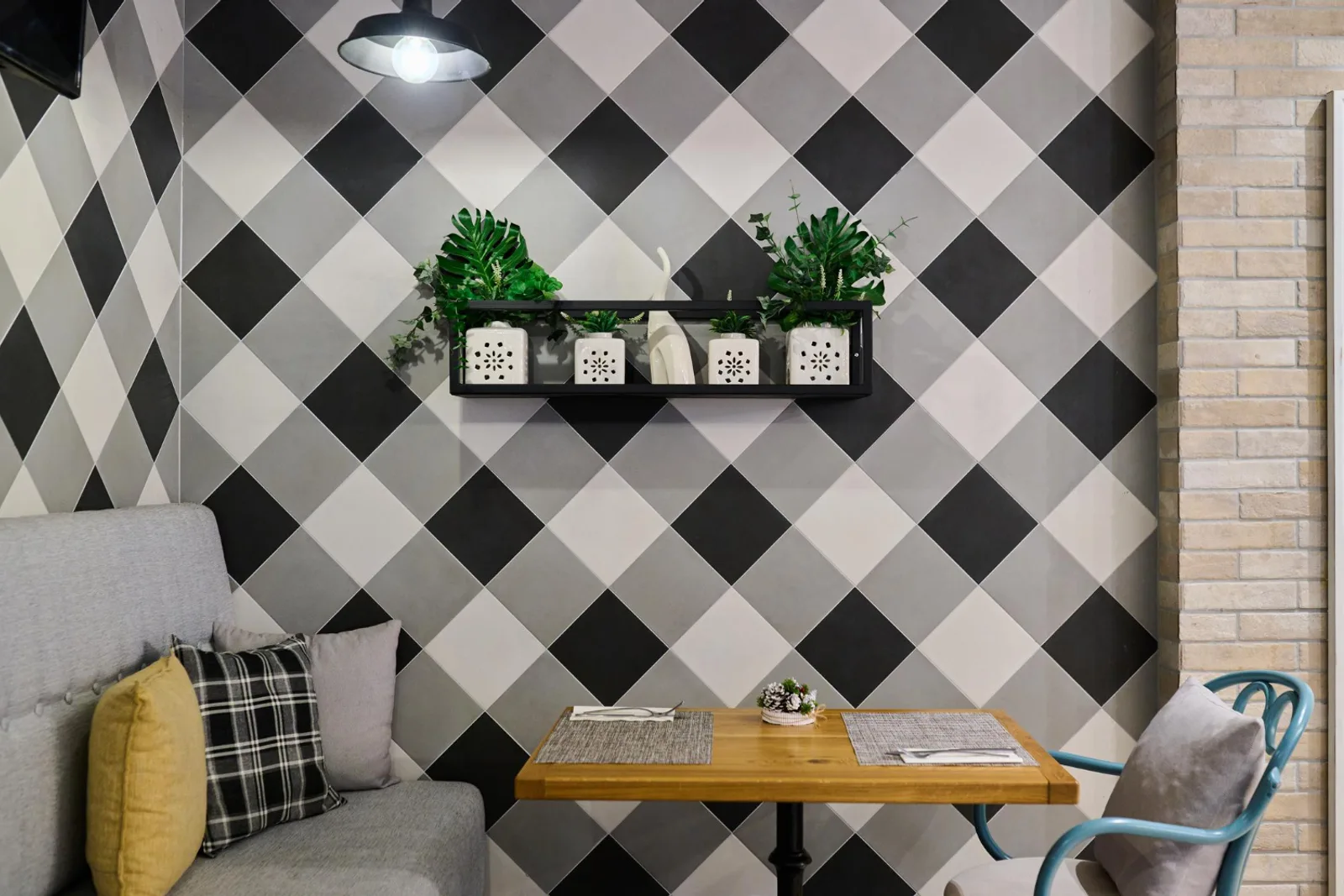
You’re going to learn which wallpaper choices actually make a small room feel bigger, brighter, and more finished — instead of more cramped. Small spaces like powder rooms, entryways, home offices, and reading nooks are some of the best places to use wallpaper, but they’re also the easiest place to get it wrong. This guide walks through the patterns, colors, and finishes that work in tight footprints, plus a few practical steps to get the installation right the first time.
Key Takeaways
- Scale and pattern size matter more in small spaces than in large rooms — the wrong scale can overwhelm a tight footprint.
- Light, cool tones tend to open up a small space, while dark, saturated tones create a cozy, intentional feel.
- Sheen and finish affect how a small room reads in different lighting conditions throughout the day.
- Professional installation matters more in small spaces, where seams, corners, and outlets are harder to hide.
- A well-chosen wallpaper can make a small room feel like the most memorable spot in the house.
Wallpaper for Small Spaces — what actually makes a small room work
When you’re decorating a small room, it’s tempting to assume you need to “play it safe” with plain walls to avoid making the space feel smaller. In reality, the opposite is often true. A well-scaled wallpaper can add depth, personality, and even the illusion of more square footage — while bare, flat walls in a tight room can feel unfinished or sterile.
The key is matching the pattern to the room’s proportions. Large-scale florals or oversized murals can work beautifully in a small powder room precisely because there’s no competing furniture or long sightlines to break up the pattern. Micro-repeats and subtle textures, on the other hand, tend to read almost like a solid color from a distance — a safer choice for anyone hesitant to commit to a bold statement.
If you’re still deciding which room in your home is the right candidate for wallpaper, our guide on which rooms in your home are perfect for wallpaper is a good place to start before narrowing down a pattern.
Signs a small space is ready for wallpaper
- The room has minimal furniture and few large sightline obstructions.
- Plain paint feels flat, cold, or unfinished, even after styling with decor.
- You want a design moment that guests will remember without a full renovation.
- The space has good natural or layered artificial lighting to show off texture and pattern.
- You’re working with a powder room, entryway, closet, or nook — rooms built for a bold, contained statement.
If several of these apply to your space, wallpaper is likely a smarter investment than another coat of paint.
Choosing pattern and scale for a small room
- Small-scale prints read almost like texture from across the room — ideal for anyone wary of commitment.
- Large-scale, all-over patterns can work surprisingly well in tight spaces because there’s no furniture breaking up the design.
- Vertical stripes or elongated motifs draw the eye upward, making ceilings feel taller.
- Horizontal patterns can visually widen a narrow hallway or entryway.
- Murals and scenic wallpapers create the illusion of depth, almost like a window into another space.
Choosing the right category of wallpaper for the room’s purpose is just as important as the pattern itself. Our overview of the main types of wallpaper breaks down vinyl, paper, fabric, and grasscloth options so you can match material to the room’s humidity and traffic level.
Color and finish: what really opens up a small space
- Light, cool-toned wallpapers (soft blues, greens, off-whites) tend to make walls recede, opening up the room visually.
- Dark, saturated tones don’t shrink a room the way people expect — they can make a small space feel intentional and enveloping, especially with good lighting.
- Matte finishes minimize glare and hide wall imperfections better than glossy finishes.
- Metallic accents reflect light and can make a windowless space, like a powder room, feel brighter.
- Consistency between wall color and trim helps a small room feel seamless rather than choppy.
Signs your small-space wallpaper project needs a professional
- See: uneven or textured walls that make DIY application difficult to get flush.
- Hear: conflicting advice online about seam placement and pattern matching in tight corners.
- Notice: awkward angles around light switches, vents, or built-in shelving.
- Symptoms of a rushed job: visible seams, bubbling, or misaligned repeats near corners.
- Ceiling or stair-adjacent walls involved, where safety and reach become a factor.
Tight spaces often have more corners, outlets, and awkward angles per square foot than large rooms — which is exactly why professional installation tends to matter more here, not less.
How to plan a small-space wallpaper project — practical steps
If you’re ready to move forward, plan the project in order:
- Measure the room carefully, including doors, windows, and any built-ins.
- Order a sample and tape it to the wall to see how it reads in your actual lighting.
- Confirm the wall surface is clean, dry, and smooth before ordering materials.
- Decide on pattern placement — center the design on the focal wall first.
- Schedule installation with enough lead time to avoid rushing the finish.
- Don’t skip primer or wall prep just because the room is small — the same rules apply.
If your small space includes a staircase wall or an unusually shaped ceiling, it’s worth reading our guide on installing wallpaper on stairs or wallpaper installation on the ceiling before finalizing your plan — both cover angles and techniques that apply directly to compact rooms.
Small spaces beyond the powder room
Powder rooms get most of the attention, but they’re far from the only small space that benefits from wallpaper. Home offices, closets, laundry rooms, and reading nooks are all strong candidates. Even commercial settings apply the same logic — our piece on enhancing a gallery space with contemporary wallpaper shows how the same small-space principles — scale, lighting, and finish — apply just as much to a compact gallery wall as to a home nook.
If you’re furnishing a guest room or a small inn-style suite, the same approach applies at a slightly larger scale — see our guide on creating a cozy atmosphere in a bed and breakfast with wallpaper for ideas on using an accent wall to anchor a small room without overwhelming it.
Quick comparison: pattern strategy by small-space type
| Space Type | Best Pattern Strategy |
|---|---|
| Powder room | Bold, large-scale pattern or mural |
| Entryway / hallway | Vertical stripe or elongated motif |
| Home office nook | Subtle texture or small-scale print |
| Closet interior | Playful, saturated pattern |
| Reading nook | Warm, cozy tone with soft texture |
Best practices for small-space wallpaper projects
- Always test a sample in the actual room before committing to a full order.
- Choose washable or moisture-resistant materials for bathrooms and kitchens.
- Don’t rush wall prep — small imperfections show more in a tight, well-lit space.
- Center bold patterns on the focal wall, not on a random seam.
- Work with an experienced installer for rooms with tricky angles, ceilings, or stairs.
- Keep extra rolls on hand in case of future repairs or touch-ups.
Quick Summary — Wallpaper for Small Spaces
Small spaces are some of the best rooms in the house to use bold wallpaper, precisely because there’s little furniture to compete with the pattern. Match the scale to the room, choose a finish that suits the lighting, and don’t underestimate the value of clean wall prep and professional installation in tight corners. Done right, a small room can become the most talked-about part of your home.
Conclusion
Wallpapering a small space is more about proportion and planning than luck. Simple signals — flat walls that feel unfinished, awkward corners, a room with no design personality — are all signs it’s time to consider wallpaper. Choose your pattern scale carefully, test it in real lighting, and don’t skip proper wall prep. A well-planned small space is more affordable to get right than to redo. Ready to transform a small room in your home? Contact RCP Wallpaper to get a free estimate for your project in New Jersey and New York.
Frequently Asked Questions
Does wallpaper make a small room look smaller?
Not necessarily. Light tones and small-scale patterns tend to open up a room, while even bold, dark patterns can make a small space feel intentional and cozy rather than cramped, especially with good lighting.
What’s the best wallpaper pattern for a small bathroom or powder room?
Bold, large-scale patterns and murals often work best in powder rooms since there’s minimal furniture to interrupt the design. Smaller-scale prints are a safer option if you prefer a more subtle look.
Should I hire a professional for a small wallpaper project?
It’s recommended, especially in rooms with corners, outlets, or uneven walls. Small spaces often have more tricky angles per square foot than large rooms, which makes clean seams and pattern matching harder to achieve on your own.
What type of wallpaper works best in humid small spaces like bathrooms?
Vinyl or moisture-resistant wallpaper is typically the best choice for bathrooms, powder rooms, and other high-humidity spaces, since it holds up better against peeling and warping.
How much wallpaper do I need for a small room?
It depends on the room’s dimensions, ceiling height, and pattern repeat. A professional installer can measure the space and calculate the exact amount needed, accounting for pattern matching and waste.