Who we are
The team behind RCP Wallpaper
RCP Wallpaper is a dedicated wallpaper installation company with over ten years on the trade — residential and commercial, across New Jersey and the New York service area.
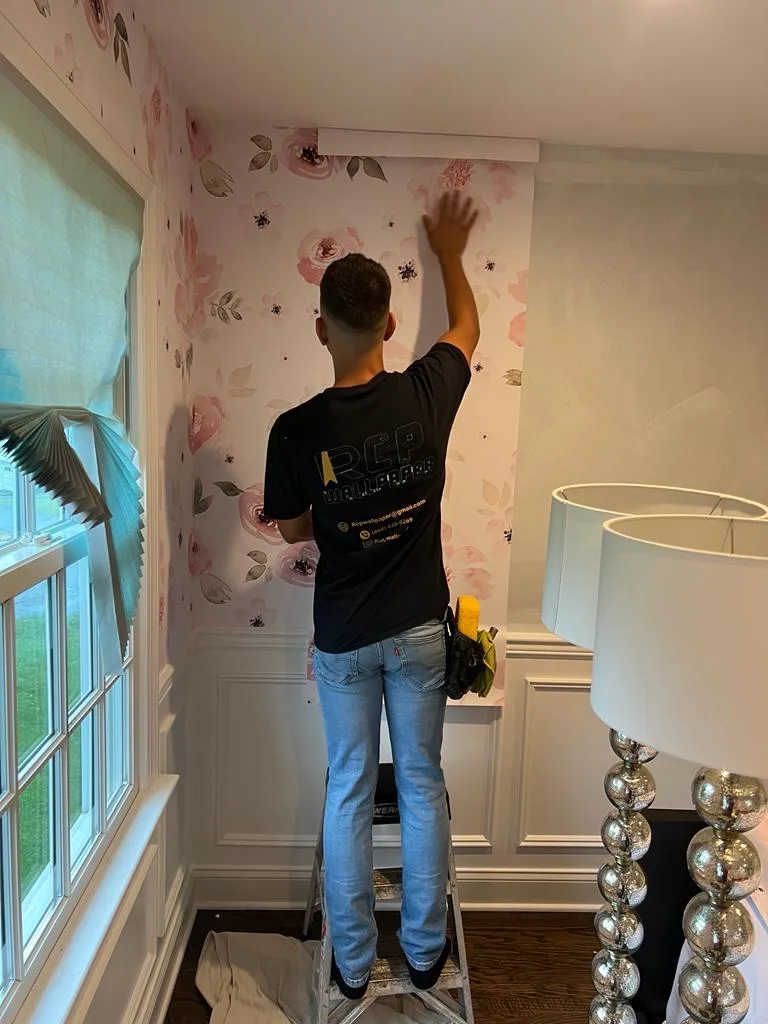
RCP Wallpaper is a focused, craft-driven operation. No general painting side jobs — just specialized wallpaper installation, done by a crew that has been doing only this for over a decade.
The team behind the work
Wallpaper is the specialty, not a side offering
RCP Wallpaper started doing exactly what the name says — wallpaper, and only wallpaper. Not a service tacked onto a painting business, but the actual trade. That focus shows up in the details other contractors rush past: the pattern repeat measured before the order goes in, seams sealed properly, edges that stay down after the first humid week.
The company is run by Rafael and works with a small crew of installers who have been doing this together for years. Every job goes out under the same standard, whether it is one accent wall in a powder room or an entire hotel corridor.
Quotes are free on every job, big or small. Send a few details about the space and you get a real number back — not a range that changes once someone shows up.
Paperwork, before the paper
Licensed, insured, and covered for workers' compensation
Wallpaper installation sits in a corner of the trades with almost no barrier to entry, which is why the question worth asking any installer is not how long they have been doing it but what happens if something goes wrong in your home. A dropped ladder through a banister, a crew member injured on a stairwell — without coverage, that lands on the homeowner.
RCP Wallpaper carries general liability insurance and workers' compensation for the crew, and is registered to work in New Jersey on both residential and commercial jobs. Certificates of insurance available on request — for co-ops, condo boards and commercial buildings, the certificate goes straight to management before the install date instead of being chased the morning of.
Licensed contractor
Registered to work in New Jersey, residential and commercial.
Fully insured
General liability coverage. Certificates of insurance available on request.
Workers' compensation
The crew is covered, so a job in your home or building is not your exposure.
10+ years in the trade
Wallpaper only — not a sideline of a painting business.
Mission
Make wallpaper installation something a homeowner never has to think about twice. The paper goes up right the first time, and it stays up.
Vision
To be the installer New Jersey designers and homeowners call by name when the pattern is expensive and the walls are difficult.
Values
Show up when we say we will, protect the space we work in, and leave the room cleaner than the reviews expect.
What sets the work apart
Why clients keep coming back
5.0 stars across 131 Google reviews
Reviewers keep naming the same three things: clean seams, patterns that line up, and a room left tidy. The average has held at a perfect 5.0.
Over 10 years installing wallpaper
A decade of walls means the awkward ones are familiar territory — textured plaster, two-story stairwells, ceilings, tight powder rooms. None of it is a first attempt.
Every wallpaper type and budget
Grasscloth, vinyl, fabric, murals, peel and stick, prepasted. Each material installs differently, and the technique changes to match what you picked.
Residential and commercial, same standard
A single accent wall and a full hotel corridor get the same prep and the same finish. Commercial jobs are planned around your business hours.
Floors covered, space left clean
Furniture and floors get protected before the first roll opens, and the cleanup happens before the crew leaves. It comes up in review after review.
The technical side
Materials we have installed enough times to price honestly
Ten years in one trade mostly buys you the ability to recognize what a job actually is before quoting it. Grasscloth on a long living room wall is a sequencing problem. A mural is a measuring problem that has to be solved before the order is placed, because the panels arrive cut to the wall you described. Silk and paper-backed textiles are a cleanliness problem, where a fingerprint of paste in the wrong place cannot be corrected.
Those are the jobs designers call about, and they are the reason the crew works on wallpaper and nothing else.
Grasscloth and natural fibers
Sisal, jute and hemp bonded to a paper backing. There is no pattern repeat to line up, so the craft is in the sequencing: panels are reversed to even out the natural shading between rolls, and paste never reaches the face — on grasscloth a smudge does not clean off.
Wall murals and panel sets
Numbered panels that form one image. The wall gets measured and checked for square before the order goes in, because a mural is cut to your wall specifically. Half an inch of drift across six panels is visible from the doorway.
Fabric, silk and textiles
Linen, silk and paper-backed textiles are the least forgiving surfaces in the trade. They go over a liner where the wall calls for it, and the seams are double-cut so the weave reads continuous instead of stopping at every panel.
Commercial vinyl
Type II vinyl for corridors, lobbies and hospitality — the weight that survives carts, cleaning crews and daily traffic. Double-cut seams and the correct primer are what keep the edges from lifting a couple of years in.
Designer and non-woven papers
The papers interior designers specify, where a single roll can cost more than the labor to hang it. Most are non-woven: they hang paste-the-wall and strip dry years later, which is the difference between a repaint and a drywall repair.
Peel and stick
Removable panels for rentals, nurseries and anything meant to change in a few years. Easy to underestimate: the adhesive telegraphs every bump underneath, so the wall prep matters more here than on a traditional paper, not less.
How the work is actually done
Preparation, alignment, and seams
Almost every wallpaper failure people describe — edges lifting, a seam that opened over the winter, a pattern that drifts as it crosses the room — traces back to something skipped before the paper went up, not to the paper itself. These three stages are where a job is won or lost, and they are the ones a low quote is usually cutting.
Wall preparation
Old paper comes off, holes and cracks are filled and sanded flat, and the wall gets a wallcovering primer — not the leftover paint primer. That primer is what lets a panel slide into position while the paste is still wet, and what lets the paper strip off cleanly years later without tearing the drywall face. Textured walls get skim-coated or lined first, because texture reads straight through the finished paper.
Pattern alignment
Every roll is checked for match type — straight, half-drop or random — and the vertical repeat is measured before the first cut, so the pattern is not discovered short halfway up a wall. The first panel goes to a plumb line, never to the corner, because no corner in a real house is plumb. Where the pattern has to break, the break lands where the eye does not travel.
Seam finishing
Seams are butted, never overlapped, and double-cut on vinyl and textiles so the two edges meet exactly instead of shadowing. Paste that reaches the surface is cleaned while it is still wet. Corners are cut and restarted on a fresh plumb line rather than wrapped around — wrapping a corner is what sends a pattern running downhill across the rest of the room.
Client Feedback
What clients keep saying
Service Area
Where the crew travels for work
The crew travels across New Jersey and the New York service area for residential and commercial wallpaper projects.